

Social Entrepreneurship
Voices from the Skoll World Forum
A report from the opening plenary at the Skoll World Forum, featuring Paul Farmer.

A report from the opening plenary at the Skoll World Forum, featuring Paul Farmer.
Cloud-based tools encourage greater collaboration, allowing us to re-imagine problems and develop new solutions to tackle social problems.
The recent Haiti earthquake and relief show that funders are not willing to make the significant investments needed to support nonprofits.
How donors can more effectively provide long-term support in rebuilding Haiti after a devastating earthquake.

The massive charitable response to the devastation in Haiti should be a wake-up call for the charitable marketplace.
Instead of sending the money all at once, donors should create a plan to stagger and guarantee funding for years to come.

When disaster strikes, governments often rely on nonprofits and businesses to help with relief efforts. But making up for the public sector's shortcomings is neither an appropriate nor effective use of the private sector's strengths.

The issue of the H1N1 influenza pandemic remains a hot topic internationally as confirmed cases are reported daily and concerns about access to the H1N1 vaccine increase. In this audio interview from the Business Roundtable's Partnership for Disaster Response, Executive Director Larry Burton talks with The Brink's Company Chairman, President and CEO and Partnership Chairman Michael Dan. The two discuss the Partnership's recent responses to the H1N1 influenza pandemic.

How is New Orleans rebuilding after Hurricane Katrina? In this Stanford Center for Social Innovation sponsored presentation at the Social Enterprise Alliance 2009 Summit, Louisiana Lieutenant Governor Mitch Landrieu discusses the role of tourism in the city's rehabilitation with Root Cause founder, Andrew Wolk. Landrieu details his work to found the nation's first government-run Office of Social Entrepreneurship, and emphasizes how New Orleans and the entire state are being strengthened by the development of their cultural assets.
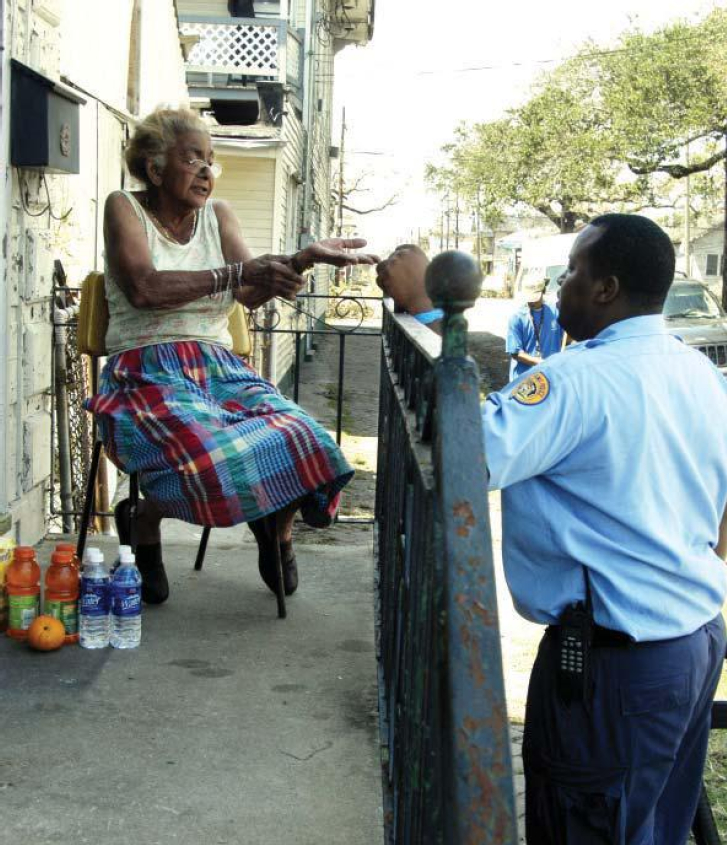
New research reveals the economic hardships that Katrina's "stayers" were battling and the abundance of negative opinions about them.